


Grand-Hope Enters the CFC Carbon-Carbon Composite R&D Arena: Embarking on a New Journey for Domestic Breakthrough in High-End Composites
Amid the global advanced materials industry's shift towards "high-performance, high-reliability, and high-compatibility," CFC (Carbon-Carbon) composites have emerged as a "critical enabling material" for strategic sectors like aerospace, high-end equipment, and new energy, thanks to their core attributes of lightweight, high-temperature resistance, and structural stability. However, the domestic high-end CFC sector has long been constrained by technological barriers and process bottlenecks, with core products reliant on imports, struggling to meet the demands of downstream industries for high-quality development. Against this backdrop, Grand-Hope, whose core strength lies in the import substitution of carbon fiber thermal field materials, is now officially directing its R&D focus toward CFC carbon-carbon composites. Building on its technological foundation and guided by industry needs, Crown embarks on a strategic evolution from a "thermal field materials leader" to a "comprehensive innovator in high-end composites," injecting new momentum into the breakthrough of China's domestic CFC industry.
Strategic Layout: Targeting High-End Composite Gaps, Filling Domestic Technology Voids
The value of CFC carbon-carbon composites lies in their adaptability to extreme environments—from maintaining structural stability at temperatures of thousands of degrees Celsius, achieving strength breakthroughs under lightweight demands, to demonstrating wear resistance in complex working conditions. They cover "performance heights" largely unreachable by traditional materials. However, domestic CFC R&D has long been concentrated in mid-to-low-end applications. The high-end sector faces not only technical challenges like complex preparation processes and long production cycles but also lags behind international leading standards in key metrics such as material density and oxidation resistance. This forces downstream high-end equipment manufacturers to rely on imported products, increasing industrial chain costs and posing supply chain security risks.
Crown's entry into CFC R&D is not a coincidental foray but a move based on in-depth analysis of industry trends and its own long-term strategic planning. As an early achiever in import substitution for silicon carbide thermal field materials, Crown has accumulated mature technological know-how and R&D experience in areas like carbon fiber modification, composite forming, and thermal field compatibility. These capabilities precisely provide the "foundational support" for CFC development. From thermal field materials to CFC carbon-carbon composites, Crown's strategy is essentially a deep dive into the "carbon fiber-based high-end materials" track, aiming to fill the R&D gap in China's high-end CFC sector through technological synergy and provide downstream industries with "secure, controllable, and performance-matched" domestic solutions.
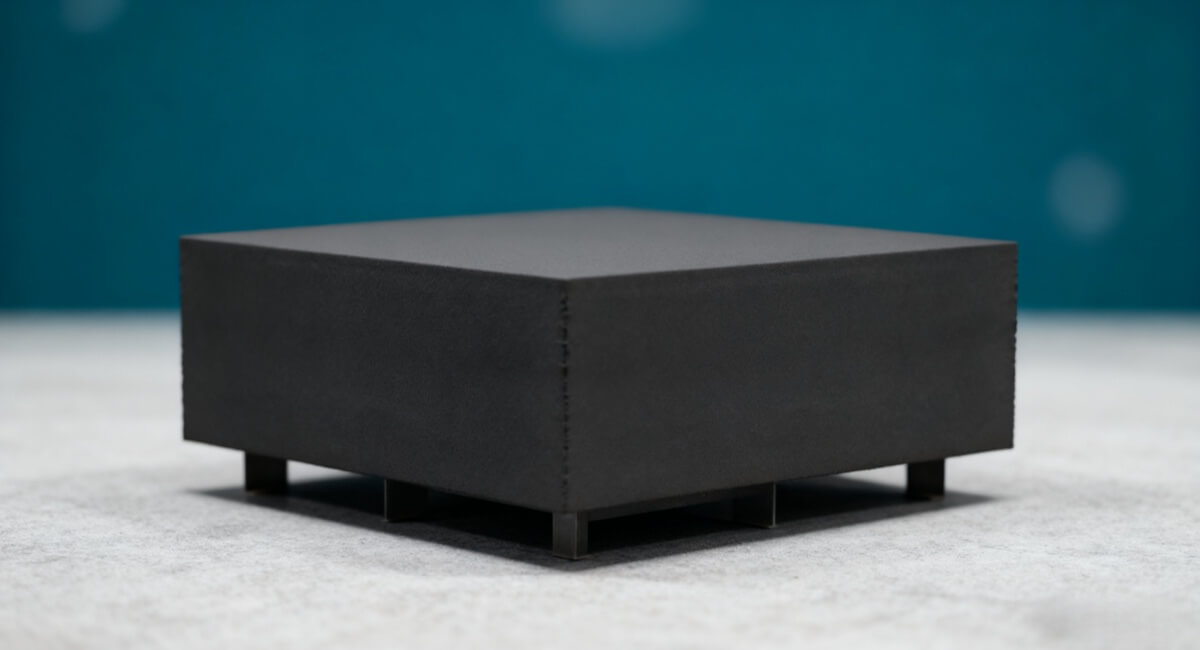
Technology Enablement: Leveraging Accumulated Expertise to Build a Differentiated R&D Path
Crown's core advantage in CFC R&D stems from its years of accumulated technological expertise and innovative thinking in the carbon fiber materials field. Unlike starting from scratch, Crown transforms its past experience in carbon fiber surface modification, composite system optimization, and automated process design into "differentiated competitive strengths" for CFC development.
At the fundamental materials research level, Crown focuses on the core of "performance optimization" for CFCs—addressing the stringent requirements of high-end applications for high-temperature resistance and oxidation resistance. The R&D team starts with the interfacial bonding force between carbon fibers and the carbon matrix, exploring more compatible composite processes to enhance structural stability and service life at high temperatures while maintaining material lightweighting. Regarding process innovation, Crown targets the industry's "efficiency and cost" pain points. Drawing on the "automation and low energy consumption" process logic developed in thermal field material production, it seeks to optimize CFC preparation workflows, breaking the limitations of traditional processes characterized by "high time consumption and high cost," thereby laying the groundwork for future industrial-scale application of CFCs.
More importantly, Crown continues its "industry-academia-research collaboration" gene by engaging in deep cooperation with top domestic research institutions in areas like material formulation and process principles. This integrates diverse intellectual resources, helps avoid R&D detours, and ensures the CFC R&D remains focused on "solving practical problems and overcoming core bottlenecks," rather than staying at the level of laboratory exploration. This "application-oriented" R&D approach ensures Crown's CFC development is closely aligned with industry needs from the outset, possessing stronger potential for practical implementation.
Industrial Value: From Single-Product Breakthrough to Full-Chain Empowerment
The significance of Crown's CFC carbon-carbon composite R&D extends far beyond the expansion of a single product line; it lies in the "chain-wide empowerment" of China's high-end composite materials industrial chain. In the short term, Crown's R&D will directly drive technological iteration in the domestic CFC sector—breaking technological monopolies of foreign companies through key breakthroughs, providing downstream high-end equipment manufacturers with more domestic options, helping reduce costs and increase efficiency across the chain, and alleviating "chokepoint" pressures. In the long term, the technological experience and process logic developed during CFC R&D will also feed back into the broader carbon fiber-based composites industry, fostering technological upgrades in related fields and creating a virtuous cycle of "R&D – application – iteration – diffusion."
Simultaneously, Crown's CFC R&D will further complete its own product portfolio. Previously centered on carbon fiber thermal field materials, Crown served insulation needs in sectors like semiconductors and photovoltaics. The addition of CFCs will extend its product reach to broader scenarios such as aerospace, high-end braking, and specialized furnaces. This marks an upgrade from "focusing on thermal fields" to "multi-scenario coverage," and from a "product supplier" to a "high-end composite materials solution provider." This strategic upgrade will not only enhance Crown's comprehensive competitiveness in the advanced materials field but also allow it to seize market opportunities with a more holistic layout in future industrial competition.
Future Outlook: Embracing Long-Termism to Explore New Possibilities in High-End Composites
Grand-HopeThe R&D of CFC carbon-carbon composites is not an overnight project; it requires long-term technological investment and continuous process refinement. Grand-Hope explicitly states that this R&D initiative will adhere to a "long-termism" philosophy. It will not pursue short-term technological gimmicks but will follow the principle of "solid R&D and steady breakthroughs," gradually overcoming core challenges in CFC preparation, striving to introduce products that truly meet domestic industry needs and possess market competitiveness.
For Crown, CFC R&D is not merely a technological challenge but also an exploration of the development path for China's high-end composite materials industry. Through this endeavor, Crown hopes to provide the industry with referable experience for "domestic breakthroughs"—finding innovation starting points from accumulated technology, anchoring R&D direction from industry demands, and pooling breakthrough strength through collaborative partnerships. In the future, as R&D progresses, Crown may become a "game-changer" in China's CFC carbon-carbon composite field, contributing to the autonomous, controllable, and high-quality development of China's high-end new materials industry, and writing a new chapter of "Chinese innovation."