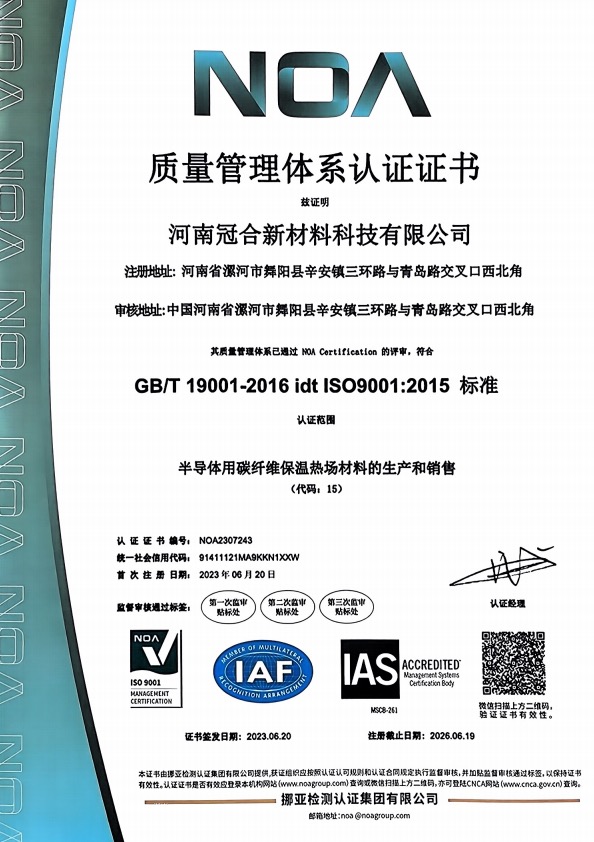
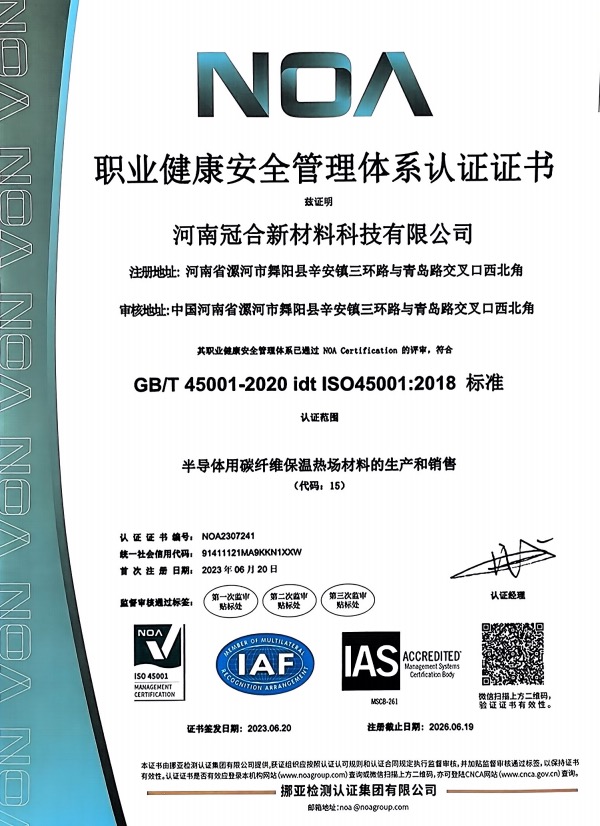
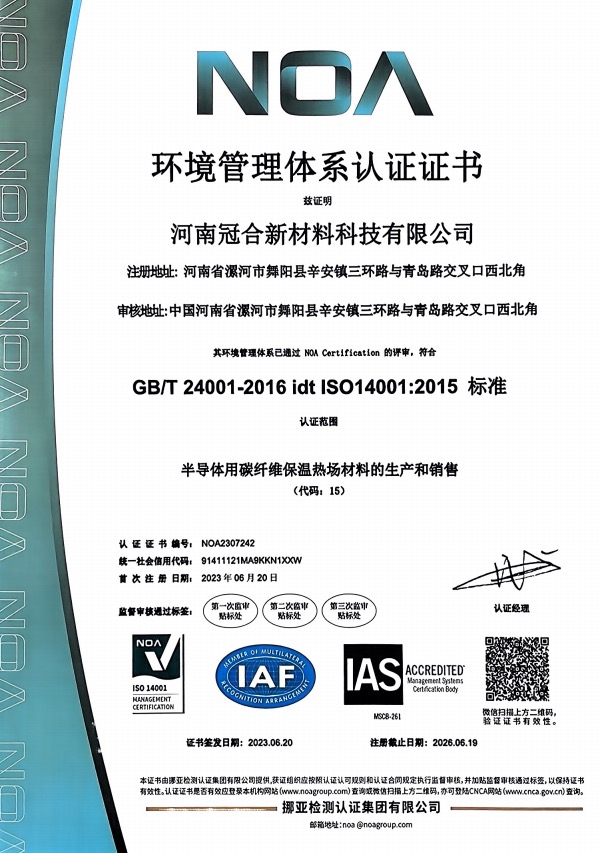
GH-CF17 Carbon Felt Insulation
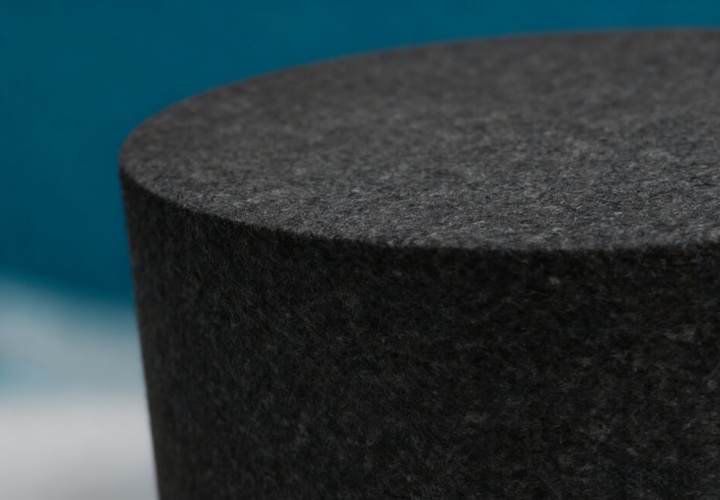
GH-CF17 is a high-performance carbon felt designed for high-temperature insulation. Often referred to as “hard felt”, this short-fiber viscose-based material is widely used in optical fiber manufacturing, silicon carbide crystal growth, high-temperature industrial furnaces, and semiconductor/sapphire growth applications. Its performance is equivalent to SGL’s MFA series.
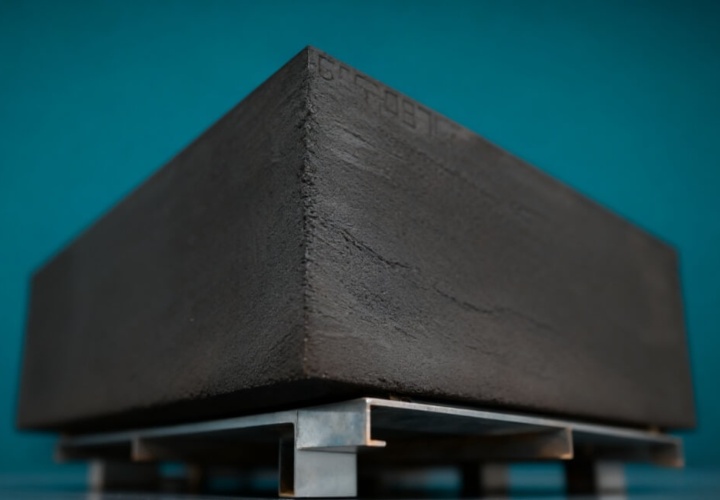
Material Structure
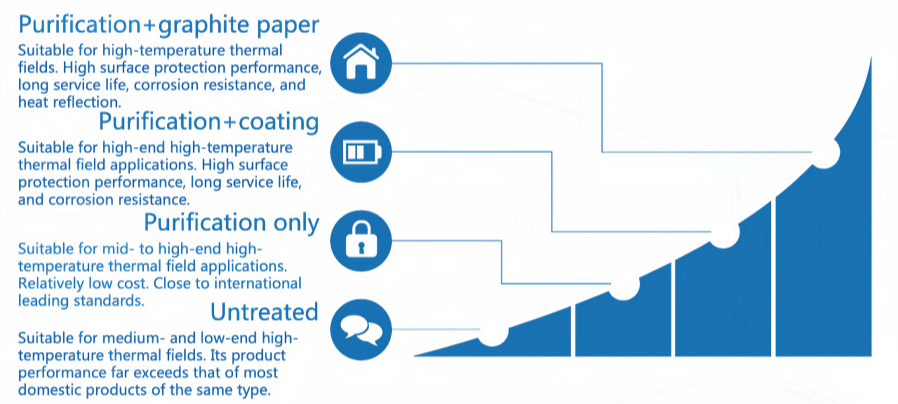
Depending on the application, the product formability of carbon felt is categorized into four types:
1.Untreated carbon felt – suitable for mid-to low-end high-temperature thermal fields, with performance significantly exceeding comparable products.
2.Purified-only carbon felt – used in mid-to high-end high-temperature thermal applications, offering relatively low cost while approaching internationally leading standards.
3.Purified + coated carbon felt – designed for high-end high-temperature thermal fields, featuring high surface protection, long service life, and corrosion resistance.
4.Purified + graphitized carbon felt – intended for premium high-temperature thermal environments, offering high surface protection, long service life, corrosion resistance, and excellent thermal emissivity.
Typical Applications
GH-CF17 carbon felt insulation is widely applied in the following high-temperature insulation scenarios:
Technical specifications
GH-CF17 carbon felt insulation offers stable physical and thermal properties suitable for demanding industrial applications.
Item | Unit | Physical and Chemical Properties |
|---|---|---|
Product Dimensions | mm | 1500*1200*445 |
Volume density | g/cm³ | 0.16–0.18 |
Compressive strength | MP | ≥0.9 |
Flexural strength | MPa | ≥1.0 |
Resistivity | Ohm·cm | 0.18 |
Thermal conductivity | W/m·K | ≤0.23 |
Thermal expansion coefficient | 10⁻⁶/°C | 2.7 |
Original ash content | ppm | ≤450 |
Ash content (purified) | ppm | ≤20 |
Maximum operating temperature | 2400°C |
Production Process
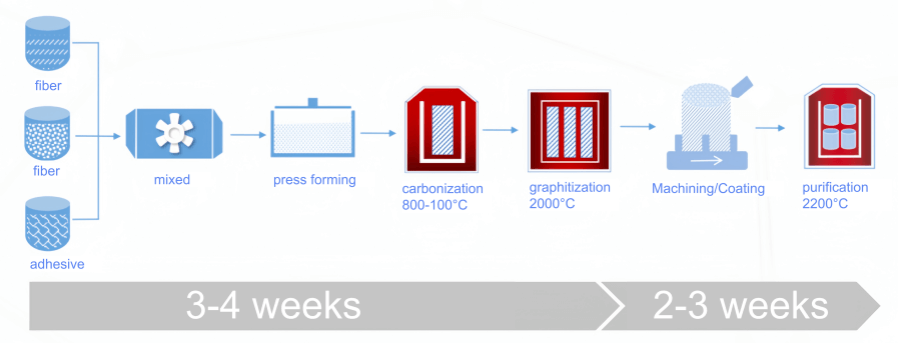
The production process of GH-CF17 carbon felt is divided into three stages: raw material mixing & molding, high-temperature heat treatment, and post-treatment purification. The entire cycle takes approximately 5 to 7 weeks. For a detailed description and process flow chart, please refer to the following section.
1. Raw Material Mixing and Forming (3–4 weeks)
・Material preparation: Various fiber raw materials and binders are prepared.
・Mixing: Different fibers and binders are thoroughly mixed to form a homogeneous blend.
・Pressing and forming: The blended material is pressed into a felt blank with a specific shape and density.
2. High-Temperature Heat Treatment
・Carbonization: The felt blank is heated to 800–1000℃, causing non-carbon elements (e.g., hydrogen, oxygen, nitrogen) to escape as gases, yielding a pre-carbonized felt with high carbon content.
・Graphitization: The pre-carbonized felt is further heated above 2000℃, allowing carbon atoms to rearrange into a graphite crystal structure, resulting in graphite felt with enhanced thermal and electrical conductivity.
3. Post-Treatment and Purification (2–3 weeks)
・Machining/Coating: The graphite felt is cut, ground, or coated to meet specific dimensional and surface requirements.
・Purification: Further treatment at 2200℃ removes residual impurities, yielding a high-purity finished carbon felt.
Insulation felt production process
Patented Technology
2022-12-30 Invention Patent: Method for Preparing Carbon Fiber Insulation Materials
2023-02-07 Patent: Method for Preparing Short-Cut Carbon Fiber Composite Materials
2023-02-22 Utility Model: Carbon Fiber Processing and Cutting Device
2023-03-28 Utility Model: Carbon Fiber Material Raw Material Mixing Device
2023-03-30 Utility Model: High-Efficiency Carbon Fiber Composite Material Preparation Device
2023-04-24 Utility Model: Carbonization Equipment for Hard Composite Carbon Fiber Products
Certifications & Accreditations