


What is High Performance Carbon Fiber Composite Insulation Material?
High-performance carbon fiber composite thermal insulation material is a cutting-edge material that combines a variety of advanced technologies.
I. Definition and basic composition
High-performance carbon fiber composite thermal insulation material is a kind of multi-functional integrated material that combines the excellent mechanical properties of carbon fiber, conductive heating characteristics and the extremely low thermal conductivity of high-performance insulation materials (such as aerogel, vacuum insulation board, etc.) through advanced material composite technology.
1. carbon fiber part: usually in the form of short-cut fibers, fiber mats, fabrics or non-woven fabrics. It is not only used as a reinforcing body to provide structural strength, but more importantly as an efficient and uniform electric heating element.
2. insulation part: this is the core of the material, responsible for preventing heat loss. Common "high-performance" thermal insulation substrates include:
(1) silica aerogel: the world's lowest thermal conductivity of solid materials (up to 0.013 W/m-K at room temperature), both ultra-light, fire prevention, hydrophobic properties.
(2) Vacuum insulation panels (VIP): made by vacuuming and sealing high-barrier cladding materials, the core of which is a microcellular structure of the core material (such as fumed silica, glass fiber mats), the coefficient of thermal conductivity can be as low as 0.002-0.004 W/m-K.
(3) Other high-performance foam: such as polyimide (PI) foam, polyether ether ketone (PEEK) foam, etc., both high-temperature resistance and good thermal insulation properties.
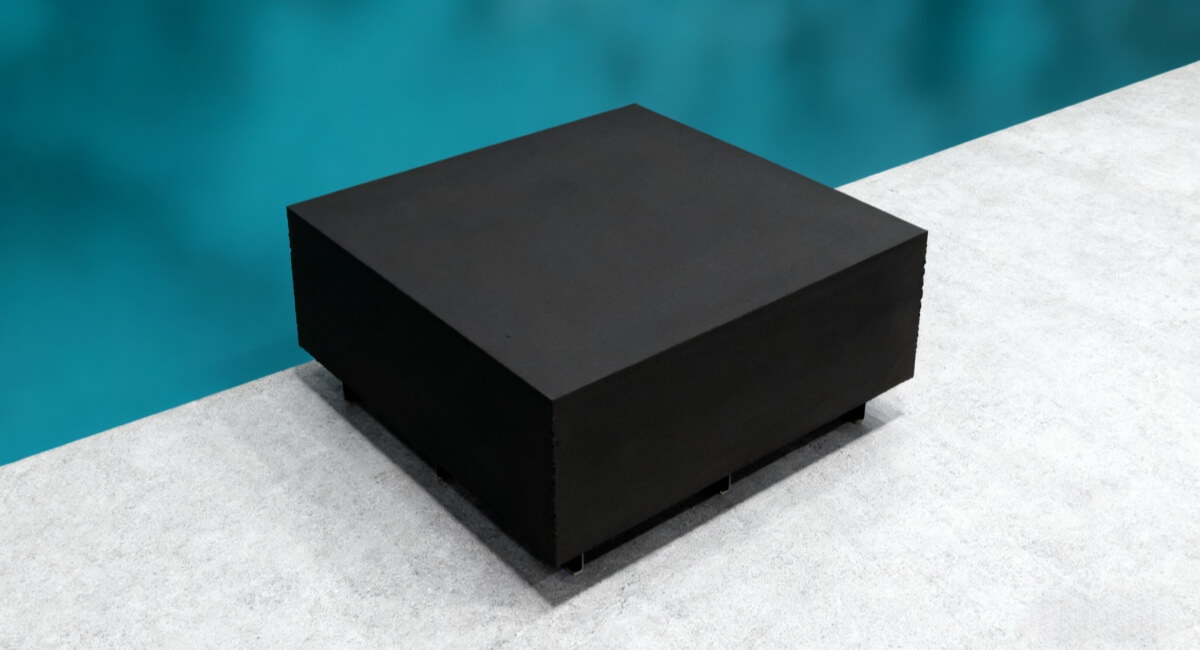
3. composite mode: usually carbon fiber layer and insulation layer through the high temperature adhesive laminate composite, or carbon fiber directly embedded in the thermal insulation matrix, forming a "sandwich" structure or homogeneous composite materials.
Second, the core characteristics and performance perspective
This material is "high performance" because it combines a variety of excellent performance:
1. the ultimate thermal insulation: thanks to the aerogel or VIP and other core materials, its thermal conductivity is much lower than traditional thermal insulation materials (such as rock wool, polystyrene boards), can greatly reduce the heat conduction and convection, energy saving effect is remarkable.
2. Active heating / snow melting and ice melting function: this is its most unique performance. When the electrodes at both ends of the material are energized, the internal carbon fiber network will generate uniform Joule heat due to the electrical resistance effect, which can efficiently convert electrical energy into heat energy. This makes the material not only "heat preservation", but also active "heat production".
3. lightweight and high strength: carbon fiber density is very low (about 1.7g/cm³), but the strength is very high (tensile strength up to 3000-5000 MPa). Composite materials after the overall light weight, while having good mechanical strength and toughness, not easy to break.
4. excellent weather resistance and chemical stability: carbon fiber and aerogel have excellent resistance to high and low temperatures, corrosion resistance, anti-aging properties, long service life, suitable for harsh environments.
5. Safety and reliability:
(1) Fireproof and flame retardant: aerogel is class A non-combustible material, carbon fiber itself is also resistant to high temperature, the overall material fire performance is excellent.
(2) Uniform heating: carbon fiber heating without open flame, small thermal inertia, fast warming, uniform temperature field, avoiding the metal heating wire may bring local overheating problems.
(3) Multi-functional integration and space saving: the "insulation" and "heater" into one, simplifying the system design, reducing the installation thickness and space occupation.
Third, the working principle perspective
The working principle is "passive insulation" and "active heat" synergy:
1. passive thermal insulation (Insulation): material in the high-performance thermal insulation substrate constitutes a barrier with countless nanoscale pores, these pores are enough to lock the air molecules in which greatly restricts the flow of air (convective heat transfer) and the solid skeleton of the heat conduction, so as to effectively block the exchange of heat.
2.Active heating (Heating): When the electricity is energized, the electrons flow in the conductive network formed by carbon fibers, collision and friction with carbon atoms, which directly converts electric energy into heat energy (Joule's law of heat: Q = I²Rt). Due to the uniform distribution of carbon fibers, so the heat is also very uniform.
Fourth, the perspective of application areas
Based on its unique properties, the material has broad application prospects in many high-end fields:
1. aerospace: used for spacecraft, satellite instrument cabin thermal insulation, as well as wings, tails and other key parts of the active thermal protection/anti-deicing system, instead of the traditional bulky and inefficient jet de-icing system.
2. new energy and high-end equipment:
(1) New energy vehicles: for power battery pack insulation and thermal management. Active heating in low temperature environment to ensure battery activity, effective thermal insulation in high temperature environment to protect battery safety and efficiency.
(2) Liquefied natural gas (LNG) storage and transportation: used for LNG pipelines, storage tanks to keep cold and reduce the "cold" loss.
(3) Construction: used in high-end buildings for radiant floor heating (electric floor heating film), roof snow melting and ice melting systems, as well as passive houses, cold storage and other external wall insulation systems that require extreme energy saving.
3. Industrial pipeline and storage tanks: used in petroleum, chemical and other fields of industrial pipeline heat insulation, instead of the traditional steam heat tracing or electric heat tracing + thermal insulation cotton combination program, more energy-saving, high efficiency, safety.
4. Outdoor and military equipment: used to make lightweight, self-heating tents, clothing, sleeping bags, etc., for field work or military operations to provide protection.
5. Comparison angle with traditional materials
| Characteristic | High-performance carbon fiber composite insulation material | Traditional thermal insulation materials (such as rock wool) | Traditional electric heating materials (such as metal heating wire+ insulation) |
| Thermal conductivity | Very low (0.013 W/m-K or even lower) | High (around 0.040 W/m-K) | Depends on the outer insulation material |
| Heat generation function | Yes, uniform | Not available | Yes, but localized overheating is possible |
| Weight | Ultra-light | Heavy | Medium |
| Strength | High | Low, easy to crush | Low, wire breaks easily |
| Fire resistance | Excellent (Class A non-combustible) | Good (Class A non-combustible) | Depends on outer material |
| System complexity | Low (integrated) | Low (single insulation) | High (separate heat generator and insulation required) |
High-performance carbon fiber composite thermal insulation material represents the new direction of thermal insulation material development: it evolves from the traditional single, static thermal insulation function to multi-functional, dynamic and intelligent direction. It cleverly solves the problem of both extreme heat preservation and active heating through material-level innovative composite, showing great advantages in energy saving and emission reduction, system integration, safety and reliability, etc. It is one of the key new materials indispensable to the future high-end industry, aerospace, new energy and other fields.